
How solar works
Follow the energy.
From light on a roof to electricity in a kitchen: six steps, in plain language. Follow the golden line down the page — it traces the path electricity takes through a home solar system.
Energy path
- Input
- Daylight
- Generated
- Direct current
- Converted
- Alternating current
- Used
- Home first, then grid
Sun → module → DC → inverter → home ↔ grid.
-
01 Sun
Daylight reaches the roof
Solar modules respond to light. Direct sunshine produces the most, but diffuse light on a bright overcast day still contributes. How much reaches a roof depends on location, season, time of day, orientation, pitch and shading.
Light is the input — and it varies.
-
02 Solar module
Cells behind glass
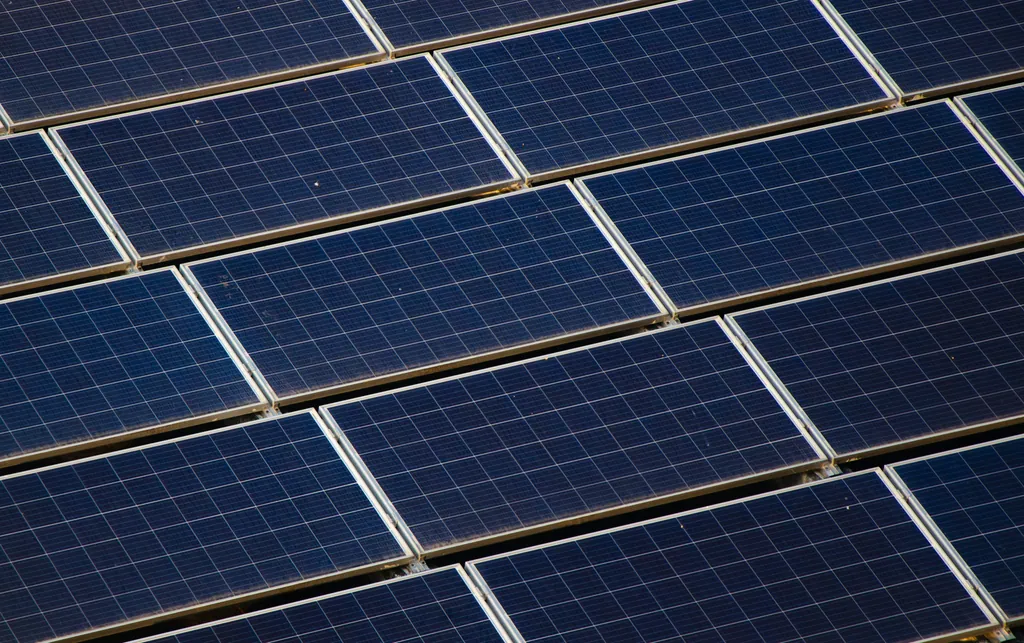
A module is a framed sheet of photovoltaic cells behind toughened glass. Several modules laid across a roof plane form the array. Their size, rated output and technology differ between products.
Modules are the visible part of the system.
-
03 DC generation
Light becomes direct current
When light reaches the cells, they produce direct current (DC) — electricity that flows in one direction. Modules are connected together, and their DC output travels by cable towards the inverter.
DC is not what household circuits use.
-
04 Inverter
DC is converted to AC
The inverter converts DC into alternating current (AC), the form a home’s circuits and appliances run on. It is usually also where the system’s performance can be monitored.
The inverter connects generation to the home.
-
05 Home
The home uses it first
Solar electricity flows into the household circuits through the consumer unit. Whatever is running at that moment — a fridge, a washing machine, a laptop — uses it before anything is drawn from the grid.
Using it as it is generated is called self-consumption.
-
06 Grid
The grid works in both directions
When the home needs more than the array produces, electricity is imported from the grid as usual. When the array produces more than the home needs, the surplus can flow out — and, where suitable metering and an export arrangement exist, be measured as export.
Import and export: the grid sits alongside.
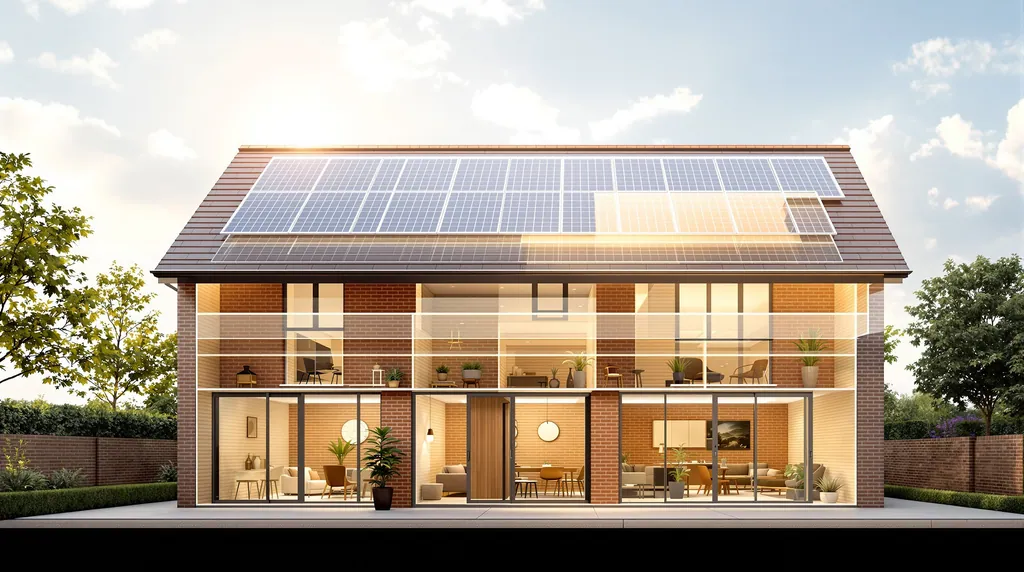
From sunlight to electricity the home can use.
Diagram key
- 01 Sunlight Daylight reaches the roof. Direct sun produces most, but modules also respond to diffuse light.
- 02 PV modules Photovoltaic cells generate direct current (DC) when light reaches them.
- 03 Inverter Converts DC into alternating current (AC) suitable for household circuits.
- 04 Home Appliances running at that moment use solar electricity first.
- 05 Grid Supplies the home when solar is not enough. Surplus may be exported where an arrangement exists (*).
* Export depends on suitable metering and an export arrangement with a participating supplier. Follow the energy in detail
Why the same system performs differently.
Every step on the path depends on conditions. The amount of light depends on the season and the weather; the share used at home depends on when the household is in; what reaches the grid depends on both.
That is why generation is modelled from assumptions — orientation, pitch, shading, equipment, location and losses — rather than promised.

Six terms worth knowing.
-
DC
Direct current
Electricity that flows in one direction. Solar cells produce DC.
-
AC
Alternating current
Electricity that changes direction many times a second. Household circuits use AC.
-
kWp
Kilowatt peak
A system’s rated output under standard test conditions — a way to compare sizes, not a prediction of output.
-
kWh
Kilowatt hour
A unit of energy. Electricity use, generation estimates and bills are all measured in kWh.
-
SELF-CONSUMPTION
Self-consumption
Solar electricity used in the home at the moment it is generated.
-
EXPORT
Export
Surplus electricity leaving the home for the grid, measured where suitable metering exists.
Questions
How solar works: questions
Do solar panels work on cloudy days?
Yes, modules respond to diffuse daylight as well as direct sun, but output is lower when it is overcast. That variability is why generation is always described as an estimate.
Do solar panels work at night?
No. Without light, the modules do not generate. At night a home draws its electricity from the grid as usual.
Why does a system need an inverter?
Solar cells produce direct current (DC), but household circuits and appliances use alternating current (AC). The inverter converts one into the other. See inverters and monitoring.
What happens to electricity the home does not use?
It flows to the grid. Where suitable metering and an export arrangement exist, it can be measured as export. Customers interested in export payments should review current Smart Export Guarantee requirements and participating supplier terms. See solar export.
Proposal · Conversation
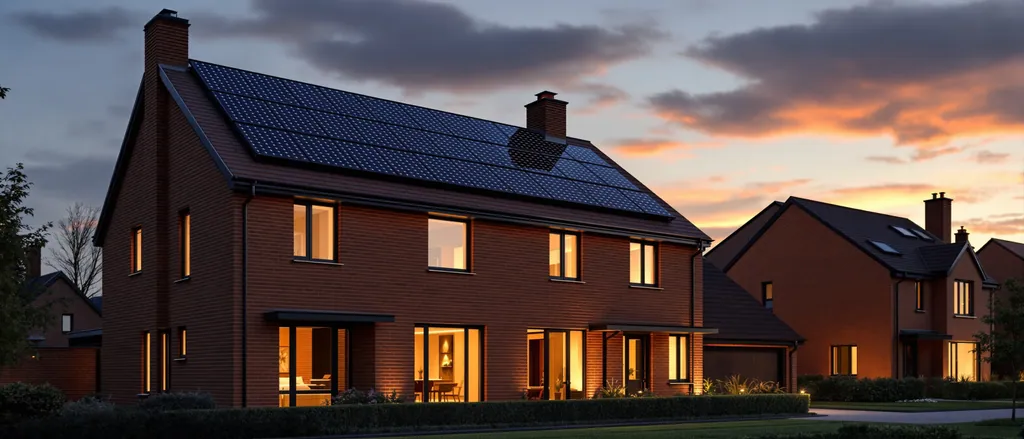
What could solar look like on your home?
Tell us about the property and household electricity use to begin the conversation.
No obligation. Nothing is sold through this website.